



Air source heat pumps have gone from a niche curiosity to the centrepiece of UK home heating policy in the space of about five years. Government grants are pushing people towards them, gas boilers are facing an uncertain future, and yet most homeowners still have only a vague idea of what a heat pump actually is or how it works. The technology has been quietly running heating systems in Scandinavia for decades, but the British conversation around it is full of half-truths, scare stories, and salesmanship pulling in opposite directions. This article is an attempt to cut through that and explain, in plain terms, what an air source heat pump does, where it shines, and where it doesn't.
The Counterintuitive Bit: Heating From Cold Air
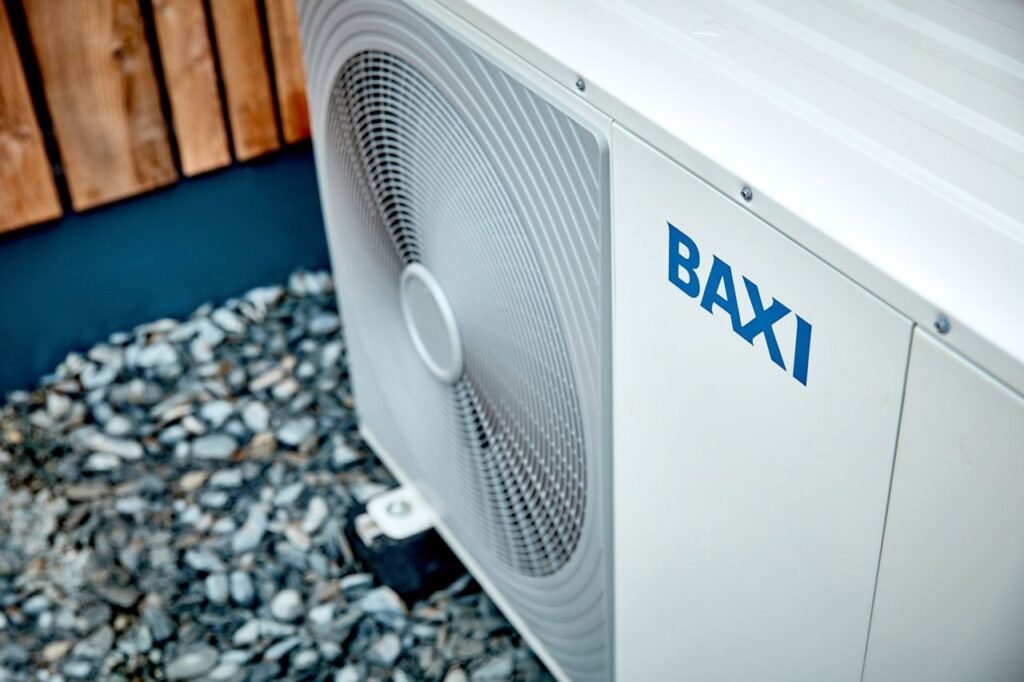
A heat pump sounds like magic until you realise it's the same technology that's been in your fridge for the last hundred years, just running in reverse. A fridge takes heat out of the air inside it and dumps that heat into your kitchen. A heat pump takes heat out of the air outside your house and dumps it into your radiators or hot water cylinder.
The reason this works even on a cold day is that "cold" is relative. Air at 2°C still contains an enormous amount of thermal energy compared to air at -20°C, and a heat pump's job is to extract that energy and concentrate it. It does this using a refrigerant — a fluid with a very low boiling point — that evaporates when exposed to outside air, gets compressed (which raises its temperature significantly), and then condenses inside a heat exchanger, releasing that concentrated heat into your home's water system.
The clever part is the efficiency. A gas boiler at its very best converts about 94% of the energy in the fuel into useful heat — you can never get more out than you put in. A heat pump is different because it isn't burning anything; it's moving heat from one place to another. For every unit of electricity it consumes, a well-designed heat pump in a UK climate typically delivers three to four units of heat. That ratio is called the Coefficient of Performance, and it's the single most important number to understand when you're evaluating one.
Where Heat Pumps Win
Heat pumps work best in homes that hold onto heat well. Good insulation, double or triple glazing, draught-proofing, and reasonably sized radiators (or underfloor heating) all push the system into its sweet spot. The reason is that heat pumps work most efficiently when they're producing water at a lower temperature than a gas boiler — typically around 45 to 55°C, compared to 65 to 75°C for a boiler. That cooler water needs more surface area to heat a room to the same temperature, which is why bigger radiators or underfloor heating help.
In a well-insulated home, a heat pump can comfortably outperform a gas boiler on running costs, and absolutely demolishes it on carbon emissions — particularly as the UK grid continues to decarbonise. Every year that more renewable generation comes online, the carbon footprint of running a heat pump drops further, while a gas boiler's stays exactly where it is.
They also offer something a boiler doesn't: cooling. Most modern air source heat pumps can run in reverse during a heatwave, providing gentle cooling through the same system that heats your home in winter. With UK summers getting hotter, this is becoming a more relevant feature than it used to be.
Where Heat Pumps Struggle
Honesty matters here, because there are homes where a heat pump is genuinely the wrong choice — at least without significant other work first.
Older properties with solid walls, single glazing, and small radiators are challenging. The heat pump can be made to work, but it'll either run constantly to keep up or you'll need to spend significant money on insulation upgrades and radiator replacements before it'll perform well. The economics get murky fast, and a lot of the horror stories you'll read online come from installations rushed into homes that weren't ready for them.
Very small flats can also be awkward, partly because the outdoor unit needs somewhere to live (usually mounted on an external wall or sitting on the ground outside), and partly because the indoor cylinder takes up space that smaller homes don't always have to spare. Combi-boiler-style heat pumps that don't need a cylinder do exist but are still a small part of the market.
The upfront cost is the other honest sticking point. A heat pump installation typically runs £8,000 to £14,000 before grants, compared to £2,000 to £4,000 for a gas boiler. The Boiler Upgrade Scheme in England and Wales currently provides £7,500 towards the cost, which closes the gap considerably, but it's still usually a more expensive starting position. The argument is that you make it back on running costs over the life of the system — and that's often true, but the maths depends heavily on your home, your tariff, and how the system is sized.
The Sizing Question
This is where good and bad installations diverge most dramatically. A heat pump that's been properly sized to a particular home, with a heat loss survey done room by room, will perform close to its theoretical efficiency. A heat pump that's been roughly specced based on a quick visit and a postcode will often be too big or too small, and it will either short-cycle (turning on and off constantly) or fail to keep up on cold days. Either way, the running costs will be worse than the homeowner was promised, and the resulting story usually ends up on a forum somewhere as evidence that heat pumps don't work.
The lesson is that the installer matters enormously. MCS (Microgeneration Certification Scheme) accreditation is the baseline — without it you can't claim grants — but within that pool, the level of care varies. A good installer will spend time on the heat loss calculation, ask about your hot water habits, look at your radiators individually, and probably push back on at least something you wanted. That friction is a good sign.
The Noise and Aesthetics Question
Modern air source heat pumps are quieter than people expect — typically around 40 to 50 decibels at a metre, similar to a quiet fridge. Planning rules require them to meet specific noise limits at neighbouring properties, and a sensibly sited unit shouldn't bother anyone. That said, units placed on flimsy walls, near bedroom windows, or in narrow alleys can amplify sound in ways that surprise people, so siting matters.
The outdoor unit is roughly the size of a small chest of drawers and isn't going to win any beauty contests. Some homeowners hide them behind trellises or in purpose-built enclosures, though these need to be designed carefully — restricting airflow around the unit will tank its efficiency.
The Bigger Picture
The honest summary is that air source heat pumps are an excellent fit for a substantial chunk of UK housing stock, a workable fit for another chunk after some preparatory work, and a poor fit for a smaller chunk where a gas boiler (or, eventually, a hydrogen-ready boiler) will probably remain the better option for the foreseeable future. The technology is mature, the running costs in a properly sized installation are competitive with gas, and the carbon savings are substantial.
What's changed in the last few years isn't the technology so much as the supporting ecosystem: more trained installers, better financial incentives, growing familiarity among consumers, and electricity tariffs designed specifically with heat pumps in mind. None of that makes a heat pump the right answer for every home, but it does mean that anyone replacing a heating system in the next five years should at least be having the conversation seriously rather than dismissing it out of hand.
The best piece of advice anyone can give you is this: get a proper heat loss survey done on your home before you make any decision. It costs a few hundred pounds, it's useful regardless of which heating system you eventually choose, and it'll tell you more about whether a heat pump makes sense than any amount of reading articles like this one.